


Open-Access Strategic Briefing
This segment details the critical events, underlying problems, strategic mitigations, and actions for improvement that technology, cybersecurity, privacy, and legal leaders must address based on the developments of the week of April 13-19, 2026. The threat landscape has escalated beyond localized disruptions, demanding a synthesized approach where legal compliance and technical execution are inextricably linked.
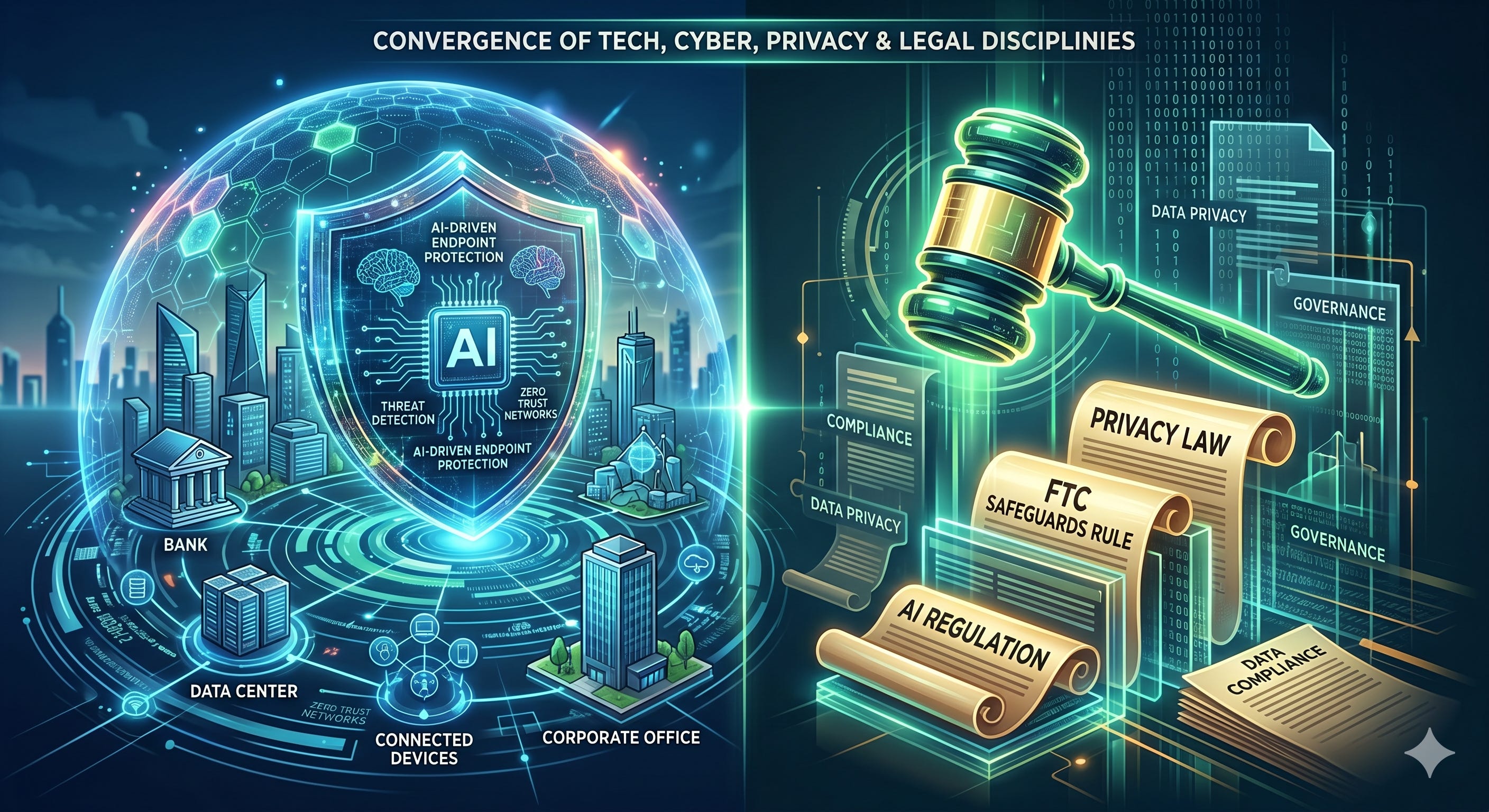
The Escalation of Zero-Day Exploitations and Infrastructure Targeting
During the April 2026 Patch Tuesday release cycle, Microsoft disclosed a multitude of vulnerabilities, with the most critical for on-premises enterprise environments being CVE-2026-32201. This vulnerability is an improper input validation flaw (CWE-20) that affects Microsoft SharePoint Enterprise Server 2016, SharePoint Server 2019, and SharePoint Server Subscription Edition. While possessing a seemingly moderate CVSS v3.1 base score of 6.5, the vulnerability allows an unauthenticated attacker to perform network spoofing and deceive downstream systems without user interaction. The technical mechanics involve unauthorized manipulation of the SharePoint framework, enabling malicious actors to bypass standard authentication controls via specially crafted network requests. Threat intelligence analysis indicates that coordinated reconnaissance campaigns targeting SharePoint farms across multiple hosting providers were executed in sequence throughout the first half of April 2026. Consequently, the Cybersecurity and Infrastructure Security Agency (CISA) added CVE-2026-32201 to its Known Exploited Vulnerabilities (KEV) catalog, mandating remediation for federal agencies by April 28, 2026.
Simultaneously, the broader infrastructure landscape was severely exploited. CISA also mandated remediation of CVE-2026-34197, a high-severity vulnerability in Apache ActiveMQ Classic with a CVSS score of 8.8, that allows remote attackers to compromise the entire messaging infrastructure. Furthermore, a critical, actively exploited zero-day vulnerability in Adobe Acrobat and Reader (CVE-2026-34621) was confirmed to allow attackers to execute arbitrary code via prototype pollution simply by enticing a user to open a malicious PDF file. This convergence of vulnerabilities signifies a broader trend: adversaries are aggressively targeting the architectural seams of collaboration platforms and document processing engines rather than relying solely on traditional malware payloads. The spoofing capability inherent in the SharePoint vulnerability allows attackers to blend seamlessly with legitimate administrative traffic, rendering conventional signature-based detection mechanisms largely ineffective.
For SMBs, the presence of actively exploited zero-days on core operational platforms represents a severe risk, particularly given that attackers consistently utilize these initial access vectors to deploy ransomware and exfiltrate proprietary data. The complexity of the patching process—which, for SharePoint, requires prerequisite updates to the Workflow Manager and specific Internet Information Services (IIS) resets—creates a perilous window of vulnerability where under-resourced SMB IT teams may believe they are protected while remaining critically exposed.
To mitigate these infrastructure threats, system administrators must immediately apply the April 14, 2026, cumulative updates from Microsoft, ensuring that all prerequisite software is properly configured before deployment. Beyond reactive patching, security operations must pivot toward proactive log auditing and threat hunting, reviewing HTTP and SharePoint Unified Logging Service (ULS) logs for anomalous layout requests or unexpected network behaviors indicative of spoofing attempts. As adversaries continuously pivot from software vulnerabilities to identity and credential-based attacks, deploying a robust, artificial intelligence-driven endpoint protection platform is no longer optional but a foundational necessity.
CrowdStrike Falcon is the definitive AI-native platform built to stop breaches, empowering organizations to secure their entire infrastructure at scale. This end-to-end solution unifies endpoint, cloud, and identity protection, leveraging world-class threat intelligence to keep enterprises decisively ahead of modern, AI-powered attacks and zero-day exploits like CVE-2026-32201. Access advanced endpoint telemetry and secure your operational infrastructure today at: https://crowdstrike2001.partnerlinks.io/Cpf-coaching
The Data Breach Epidemic and the Collapse of the Identity Ecosystem
April 2026 has cemented a grim reality regarding the sheer scale and cascading impact of data exfiltration. The threat landscape has moved past localized business disruption and into an era of mass population identity compromise. The defining incident of the year, known colloquially as the “Mother of All Breaches” (MOAB) discovered in January, exposed an unprecedented 26 billion records by aggregating data from across multiple domains. This catastrophic event was immediately followed in April 2026 by the National Public Data (NPD) breach, which exposed 2.7 billion records, including phone numbers, physical addresses, and 272 million unique Social Security Numbers (SSNs)—accounting for approximately 80% of the United States population.
The second-order implications of the NPD breach are profound and permanently alter the cybersecurity defensive posture. Because the vast majority of American SSNs, dates of birth, and physical addresses are now publicly circulating on dark web forums and illicit marketplaces, utilizing this static information to verify user identity is fundamentally insecure and obsolete. Cybercriminals are rapidly weaponizing this aggregated identity data to execute sophisticated account takeovers, bypass basic security questions, and conduct highly targeted social engineering attacks against SMB employees. Traditional security methods, such as periodic password resets and rigid perimeter defenses, are wholly insufficient to protect organizations from these identity-based threats.
Concurrently, SMB supply chains have been decimated by targeted attacks that leverage these identity compromises and third-party vulnerabilities. In early 2026, discount retailer Giant Tiger suffered a severe breach via a third-party customer engagement vendor, exposing 2.8 million customer records and severely damaging consumer trust during a critical economic period. Similarly, Young Consulting was devastated by the BlackSuit ransomware syndicate, which carried out an attack that exposed the highly sensitive health and personal data of over 950,000 individuals, leading to mass contract cancellations, millions in legal fees, and a forced corporate rebranding to Connexure to salvage the business.
These incidents underscore that the financial impact of a breach extends far beyond the immediate extortion demands. In 2026, the average cost of a data breach globally surged to $4.88 million, with costs averaging $5.17 million for incidents involving cloud environments. For an SMB, the direct financial costs include average ransom payments of $84,000, professional incident response fees ranging from $15,000 to $50,000, legal fees easily exceeding $100,000, and thousands of dollars per day in lost productivity due to operational downtime. Furthermore, statistics indicate that 68% of data breaches in 2026 involved human error, such as employees falling victim to sophisticated phishing scams fueled by the stolen NPD data.
To survive in this hostile environment, SMBs must fundamentally shift from a tool-based mindset to a comprehensive, system-based approach that integrates prevention, detection, and rapid response. The primary mitigation strategy is to abandon knowledge-based authentication and transition entirely to Zero Trust Network Access (ZTNA), which enforces continuous authentication using cryptographic keys or biometric validation. Furthermore, organizations must enact rigorous vendor risk management protocols, as the Giant Tiger breach explicitly demonstrates that an organization’s security posture is heavily dependent on the operational resilience of its weakest third-party integration.
Cyvatar.AI delivers an enterprise-grade, managed endpoint protection solution specifically designed to empower SMBs in the digital and cloud era. This affordable, AI-driven platform provides continuous monitoring, automated threat detection, and rapid incident response without the prohibitive cost or complexity of maintaining an in-house security operations center. By deploying Cyvatar.AI, leadership can focus on core business operations while remaining perpetually secured against advanced identity-based threats and ransomware syndicates. Secure your endpoints today at: https://cyvataraif5706.referralrock.com/l/CHRISTOPHE77/
The Transition to Mandatory Federal Trade Commission (FTC) Safeguards
The regulatory environment governing SMB data security has undergone a paradigm shift with the strict enforcement of the amended Federal Trade Commission (FTC) Safeguards Rule in 2026. Operating under recent executive orders aimed at aggressively curbing cybercrime and financial fraud, the FTC has formally transitioned from offering non-binding security recommendations to enforcing mandatory, active security requirements. Businesses are no longer permitted to simply maintain theoretical security plans; they must demonstrate active, verifiable implementation of stringent technical controls.
Crucially, these sweeping FTC regulations extend far beyond traditional banking institutions. Any organization that collects, stores, or manages personal data—including tax preparation firms, mortgage brokers, automobile dealers, higher education institutions, and general SMBs functioning as “non-banking financial institutions”—is now legally obligated to meet specific baseline standards for data privacy and security. The technical mandates issued by the FTC include universal implementation of Multi-Factor Authentication (MFA) across all internal and external systems, mandatory end-to-end encryption for all customer data at rest (in storage) and in transit (during transmission), and the formal, documented designation of security leadership within the organization.
Furthermore, recent amendments to the Safeguards Rule require these covered entities to report security breaches directly to the FTC. If an organization experiences a security event involving the unauthorized acquisition of unencrypted customer information affecting 500 or more consumers, it is legally required to notify the FTC via an online portal as soon as possible, and absolutely no later than 30 days after the discovery of the incident. The penalties for noncompliance with these mandates are devastating for small enterprises: the FTC has the authority to issue civil penalties of up to $51,000 per violation. More alarmingly, regulatory actions can pierce the corporate veil, allowing for personal fines to be levied against directors and officers. If a data breach occurs and the FTC determines that mandated protections—specifically encryption or MFA—were absent, fines can rapidly escalate into the millions of dollars.
The explicit mandate for a Written Information Security Program (WISP) and a formalized Incident Response Plan transforms cybersecurity from an isolated IT issue into a matter of paramount corporate governance and legal liability. There is now a functional “reverse presumption of knowledge” in FTC investigations; ignorance of data mapping, network architecture, or third-party vulnerabilities is treated as gross negligence. This forces SMBs to achieve enterprise-grade visibility over their entire digital supply chain, a task that fundamentally alters operational budgets and legal risk profiles. This federal action coincides with a rapid expansion of state-level comprehensive privacy laws, with new legislation taking effect in Florida, Texas, Oregon, and Montana, requiring organizations to navigate a highly fragmented compliance landscape.
To mitigate these severe regulatory risks, organizations must officially appoint a Qualified Individual—either an internal employee or an outsourced Virtual Chief Information Security Officer (vCISO)—to oversee and take accountability for the information security program. Following this designation, leadership must audit all technological infrastructure to guarantee that MFA and end-to-end encryption are permanently active on all external-facing and internal administrative portals. Finally, legal and technical teams must collaborate to formulate and enforce a comprehensive WISP that details data locations, access permissions, and a highly structured incident response strategy.
Omnistruct provides the strategic expertise necessary to build and scale robust privacy, Governance, Risk, and Compliance (GRC), and security programs, empowering organizational teams to achieve their goals without sacrificing regulatory compliance. By serving as your embedded security partner (BISO), Omnistruct delivers the executive-level guidance and hands-on support needed to mature security postures, satisfy stringent FTC WISP requirements, and perfectly align regulatory compliance with core business objectives. Explore comprehensive compliance frameworks at: https://omnistruct.com/partners/influencers-meet-omnistruct/
AI Regulatory Frameworks and Imminent Legal Challenges
The rapid proliferation of Artificial Intelligence (AI) technologies has triggered a massive legislative response, creating a highly volatile regulatory environment for SMB tech and legal leaders. On March 20, 2026, the White House issued the National Policy Framework for Artificial Intelligence, a comprehensive document outlining legislative recommendations across seven distinct policy areas, including intellectual property rights, workforce development, the protection of children, and crucially, the preemption of state AI regulations. This framework represents the federal government’s strategic attempt to establish “global AI dominance” by fostering a minimally burdensome regulatory environment that prioritizes innovation over preemptive restriction.
A highly contentious component of this federal framework is its stance on intellectual property and copyright law. The administration currently takes the official position that training AI models on copyrighted material constitutes “fair use” and does not inherently violate existing copyright laws. However, recognizing the intense debate surrounding this issue, the framework supports allowing the federal judiciary to resolve the boundary between fair use and infringement, explicitly recommending that Congress refrain from passing legislation that would interfere with the courts’ determination. Concurrently, the framework recommends the creation of federal protections against the unauthorized commercial use of AI-generated digital replicas of a person’s voice or likeness, while also insisting on preserving First Amendment exceptions for parody, satire, and news reporting.
This federal posture places SMB legal and technology leaders in a highly precarious position regarding state-level compliance. Over the past year, individual states have moved rapidly to fill the perceived regulatory void left by the federal government. For example, the Colorado Artificial Intelligence Act (SB 24-205) requires developers and deployers of high-risk AI systems to use “reasonable care” to avoid algorithmic discrimination. Connecticut’s Senate recently passed an amended algorithmic discrimination bill (SB 2), and California continues to advance stringent transparency rules such as the Transparency in Frontier AI Act (SB 53) and the Generative Artificial Intelligence Training Data Transparency Act (AB 2013). At the federal legislative level, Representative Adam Schiff introduced the Generative AI Copyright Disclosure Act, which would require developers to file detailed summaries of copyrighted works used in AI training datasets with the Copyright Office prior to public release.
The White House framework actively encourages the federal preemption of these state laws, viewing them as an unconstitutional “patchwork” that creates onerous burdens on interstate commerce. To enforce this policy, the Department of Justice (DOJ) established an AI Litigation Task Force in January 2026, explicitly tasked with challenging state AI laws in federal court. Furthermore, the Department of Commerce intends to utilize federal funding as leverage, conditioning the distribution of remaining Broadband Equity Access and Deployment (BEAD) program funds on states agreeing not to maintain AI regulations deemed excessively burdensome.
Consequently, organizations face a fragmented, contradictory legal landscape. They are legally bound to comply with stringent state laws on algorithmic fairness and transparency, while simultaneously anticipating rapid federal injunctions that could invalidate those very frameworks. Legal teams must build dual-track AI compliance strategies that comply with state mandates while remaining agile enough to pivot as DOJ preemption lawsuits unfold. Furthermore, organizations developing or heavily utilizing bespoke generative AI tools must maintain rigorous documentation regarding the provenance and origin of their training data to shield themselves against future intellectual property litigation, regardless of the current federal administration’s lenient stance on fair use.
The Digital Wiretapping Crisis and Website Tracking Litigation
Beyond traditional data breaches and infrastructure vulnerabilities, April 2026 has witnessed a massive, unprecedented surge in cyber privacy litigation targeting the everyday website-tracking practices of small and medium-sized businesses. According to comprehensive research published by the cyber risk intelligence firm KYND, lawsuits categorized as digital wiretapping, session replay, and tracking pixel violations have escalated exponentially, rising from hundreds of cases historically to over 2,000 annually.
These class-action lawsuits and individual claims focus heavily on the unauthorized collection, processing, and sharing of user activity data—such as IP addresses, browsing behavior, video viewing habits, and device identifiers—captured by ubiquitous third-party marketing pixels and analytics tools deployed on SMB websites. Crucially, this wave of litigation is proceeding under state wiretapping laws and privacy statutes that do not require plaintiffs to prove any actual financial harm or tangible damages; the mere act of tracking a user without explicit, documented, and prior consent is sufficient to trigger severe legal liability.
KYND’s research, which analyzed approximately 10,000 North American organizations, revealed that roughly 18% used tracking technologies with no visible user consent mechanisms in place. This percentage is significantly higher among SMBs, who frequently rely on common, out-of-the-box website configurations and readily integrate third-party tools for analytics, advertising, and marketing without fully understanding the underlying data flows. What was previously considered a minor, administrative compliance issue has rapidly evolved into a highly repeatable and scalable source of litigation. Plaintiff attorneys are actively deploying automated scanning software to crawl the internet, identifying websites that lack proper Consent Management Platforms (CMPs) or that exhibit pre-consent data transmission, and subsequently filing mass litigation.
The financial implications of this trend are exacerbated by shifts within the insurance industry. Cyber insurance providers are actively re-evaluating and narrowing broad privacy coverage within their cyber liability policies. Traditionally, coverage for privacy losses was triggered exclusively by a malicious data breach or network intrusion. Insurers are now clarifying that traditional policies often do not cover legal defense fees or settlements stemming from voluntary, albeit non-compliant, marketing configurations and website tracking tools.
To neutralize this threat, the marketing and IT departments must collaborate to conduct deep-packet inspections of their public-facing web assets to comprehensively catalog all third-party tracking pixels, cookies, and scripts. Immediate action must be taken to halt all pre-consent tracking, ensuring that no non-essential data is transmitted to third-party entities (such as Meta, Google Analytics, or TikTok) before the user explicitly interacts with and opts into the tracking banner. Finally, executive teams must urgently consult legal counsel and insurance brokers to conduct a thorough policy review and determine definitively whether their current cyber liability coverage explicitly protects against digital wiretapping and biometric privacy claims in the absence of a traditional cyberattack.
You’ve seen the "Why" behind this [Cyber/Tech Issue]—but knowing the risk is only half the battle. To move from awareness to actual protection, you need a localized execution plan.
The remainder of this deep dive is designed specifically for the SMB leader who needs to move fast without a massive enterprise budget. By upgrading to a paid subscription, you unlock:
The “How-To” Framework: A step-by-step breakdown of the [Process/Tool] mentioned above.
Resource Toolkit: Downloadable templates and checklists I use with my private coaching clients.
The Bottom Line: Direct analysis of the ROI and cost-savings associated with this strategy
Subscribe to Unlock the Full Strategy
Join a community of SMB leaders who stop reacting to tech shifts and start leading them.
Help Other Leaders Secure Their Future
The Network Effect of SMB Security
The most effective way to strengthen our SMB community is by sharing the strategies that actually work in the field. If you find value in these technical deep dives, helping a fellow leader bridge their tech gap makes the entire ecosystem more resilient. Cybersecurity is a collective effort, and more informed peers lead to a safer environment for everyone’s business.
Why Share This Subscription? When you refer a colleague to this newsletter, you are giving them access to the same specialized insights you use to lead your team:
Zero-fluff technical execution: No high-level theory, just the steps to implement.
Cost-saving vendor analysis: Honest looks at which tools are worth the SMB budget.
Direct coaching frameworks: Access to the same logic I use with private coaching clients.
Pay It Forward Use the button below to share this post or your unique referral link. When your peers join our community, we all benefit from a more secure and tech-forward marketplace.
