
5 Critical Security Alerts from Last Week: Copilot Bugs, Bluetooth Hacks, and New Privacy Laws
Don't let the new year catch you off guard. Here are the top risks from Jan 2026 affecting your tech stack right now.

The SMB Leader’s Guide to Surviving January 2026’s Cyber Shift: AI, Privacy, and Bluetooth Risks
Executive Summary
Security by obscurity is no longer a viable strategy for Small and Mid-sized Businesses (SMBs). As of the final week of January 2026, the technology landscape shifted fundamentally: the tools you rely on for productivity, Artificial Intelligence agents, and wireless hardware, have been weaponized, and the regulatory net has tightened around mid-market companies. To protect your organization this quarter, you must immediately pivot from “deploying” technology to “governing” it. This requires three specific actions: hardening your Microsoft 365 Copilot instances against new injection attacks, updating firmware on all corporate Bluetooth peripherals, and auditing your customer data against new, lower privacy thresholds in Rhode Island, Indiana, and Kentucky. 1 2 3
The Weaponization of Productivity: Why You Must Lock Down Copilot
The most critical threat to your data right now is not a shadowy hacker breaking through your firewall, but a malicious link tricking your trusted AI assistant. The “Reprompt” attack (CVE-2026-24307), disclosed in late January, transforms Microsoft 365 Copilot from a productivity booster into a data exfiltration tool. Unlike traditional attacks that require downloading malware, “Reprompt” requires only a single click on a legitimate-looking link. This injection exploits the AI’s architecture, forcing it to bypass its own safety guardrails and silently siphon sensitive emails, chats, and documents to an attacker’s server. 4 5
Stop Shadow AI Before It Stops You. Your employees are already using AI. The question is: are they doing it securely? I recommend Airia AI to leaders who need to pivot from "blocking" AI to "governing" it. Airia provides the orchestration layer you need to securely prototype, deploy, and monitor AI agents across your enterprise. Don't let your data leave the perimeter without a passport.
👉 Secure Your AI Journey Here: https://try.airia.com/CPF-coaching
For SMB leaders, this vulnerability changes the risk calculation for AI adoption. Copilot respects the “Identity Perimeter,” meaning it has access to everything the user can see.
This makes identity your new perimeter. If you can't control credentials, you can't control Copilot. 1Password is our standard for hardening this layer—enforcing strong, unique credentials and integrating 2FA directly into the workflow.
Try 1Password at https://1password.partnerlinks.io/cpf-coaching
If a senior executive clicks a malicious link, the AI agent can be manipulated to search for and steal “confidential” or “financial” documents accessible to that executive. You must treat your AI configuration with the same rigor as your firewall. Immediate mitigation involves configuring Data Loss Prevention (DLP) policies within Microsoft Purview to block sensitive data egress from Copilot and enforcing Conditional Access to prevent usage on unmanaged personal devices. 6 7
The Hardware Crisis: Your Headphones Are Listening
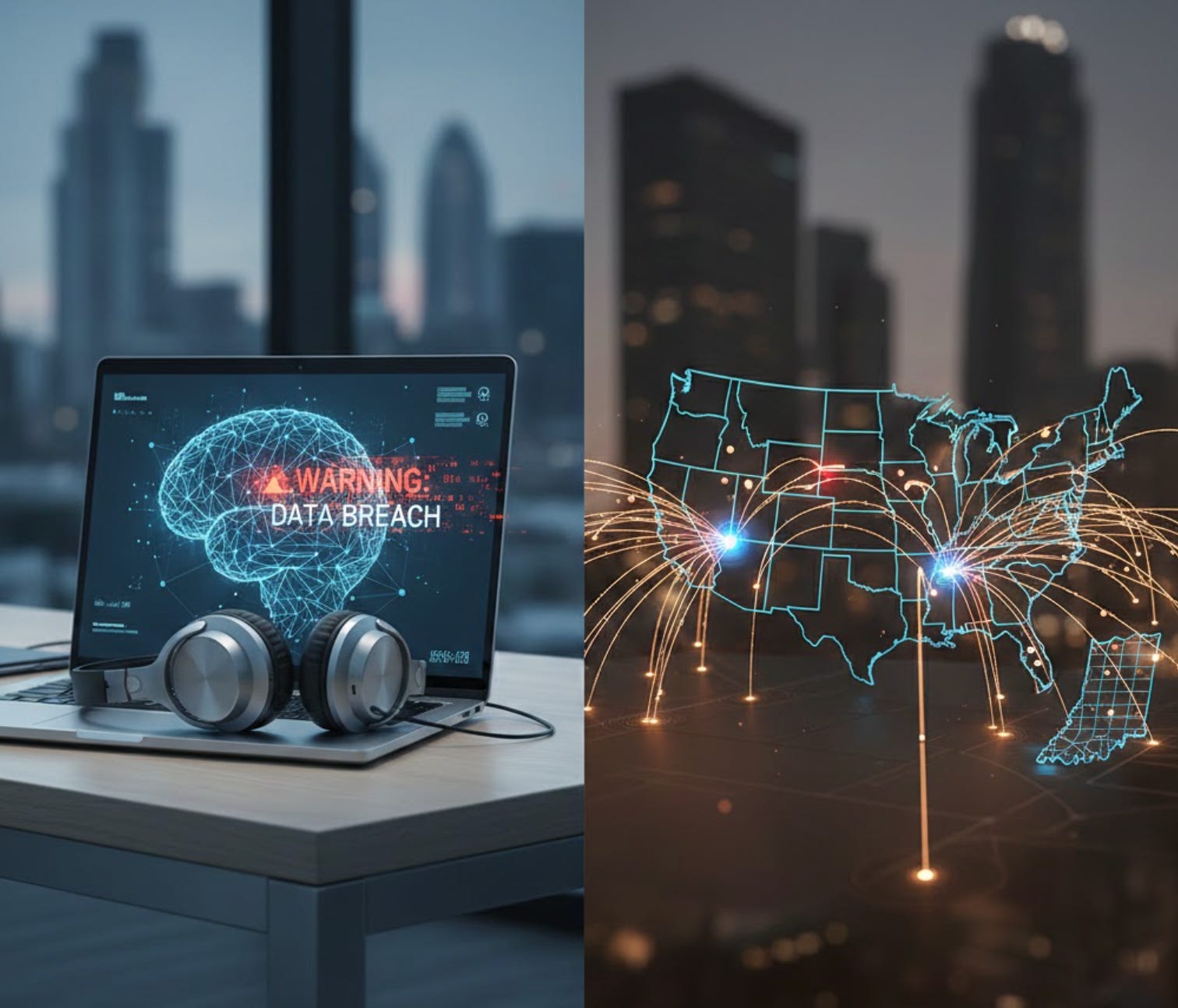
The “WhisperPair” vulnerability has shattered the assumption that local hardware connections are private. This flaw affects the Bluetooth “Fast Pair” protocol used by millions of devices, including standard enterprise equipment like Sony’s WH-1000XM5 headphones and Google’s Pixel Buds. Research reveals that this vulnerability allows attackers within physical range to hijack the connection without user confirmation. Once connected, they can eavesdrop on microphone audio, capturing sensitive board meetings or client calls, and track the user’s precise location. 8 9 10 11
This introduces a physical security risk that most SMB IT policies overlook entirely. While you likely patch your laptops weekly, peripheral firmware is often overlooked. Leaders must mandate an immediate “firmware audit” for all employees using affected devices. Furthermore, in high-stakes environments, you should enforce a policy requiring wired headsets or disabling Bluetooth in high-density public spaces such as airports and train stations. 12 13
The Regulatory Patchwork: Compliance Is Now Granular
While you secure your tech stack, you must also navigate a fractured legal landscape. On January 1, 2026, comprehensive data privacy laws took effect in Indiana, Kentucky, and Rhode Island. For SMBs, the Rhode Island Data Transparency and Privacy Protection Act (RIDTPPA) poses a specific, hidden danger. Unlike other states that set high applicability thresholds (typically 100,000 consumers), Rhode Island’s law applies to businesses processing the data of as few as 35,000 residents. 14 15 16 17
This lower threshold means many mid-sized SaaS providers and e-commerce companies are now unknowingly out of compliance. If you have a customer base in the Northeast, you may now be legally required to disclose the specific names of third parties to whom you sell data, a stricter requirement than in almost any other jurisdiction. Simultaneously, compliance in Indiana and Kentucky requires you to conduct Data Protection Impact Assessments (DPIAs) for high-risk processing. You should immediately review your customer distribution to determine if these new laws apply to you. 18 19 20 21
Conclusion: Operationalizing Resilience
The threats of January 2026 share a common theme: they exploit the trust we place in our tools and the complexity of our supply chains. Whether it is a social engineering attack like the recent Betterment breach or a technical exploit like Reprompt, the defense requires active leadership. You cannot simply buy a tool to solve these problems. You must verify your AI settings, manage your hardware assets, and understand your regulatory footprint. The cost of inaction, measured in data loss and regulatory fines, is far higher than the cost of governance. 22 23
P.S. Tool of the Week Shout out to Sane Box
A Cluttered Inbox is a Security Risk. When you are drowning in email, you are more likely to make mistakes—like clicking that one malicious link hidden in the noise. SaneBox uses AI to filter out the distractions, leaving you with only what matters. It’s not just a productivity tool; it’s a way to reduce your cognitive attack surface. 👉 Clean Up Your Inbox: https://try.sanebox.com/cpfcoaching