
Beyond Static Defense: The SMB Leader’s Playbook for Active Resilience
Tactical guides on Deepfake defense, vCISO models, and securing the AI-driven browser.

Section 1: Free Strategic Overview - Active Resilience in 2026
As we navigate the second quarter of 2026, the landscape for small- and midsize-business (SMB) tech, cyber, privacy, and legal leaders continues to evolve rapidly. The challenges we face, a critical leadership shortage of over 35,000 CISOs, sophisticated “automated opportunism” leveraging AI, and the web browser solidifying as the primary attack perimeter, demand a strategic shift. We must move beyond static defenses toward a comprehensive Active Resilience strategy.
If you are ready to bridge the leadership gap without the overhead of a full-time executive, Omnistruct provides the fractional CISO expertise needed to mature your posture and align it with your business goals.
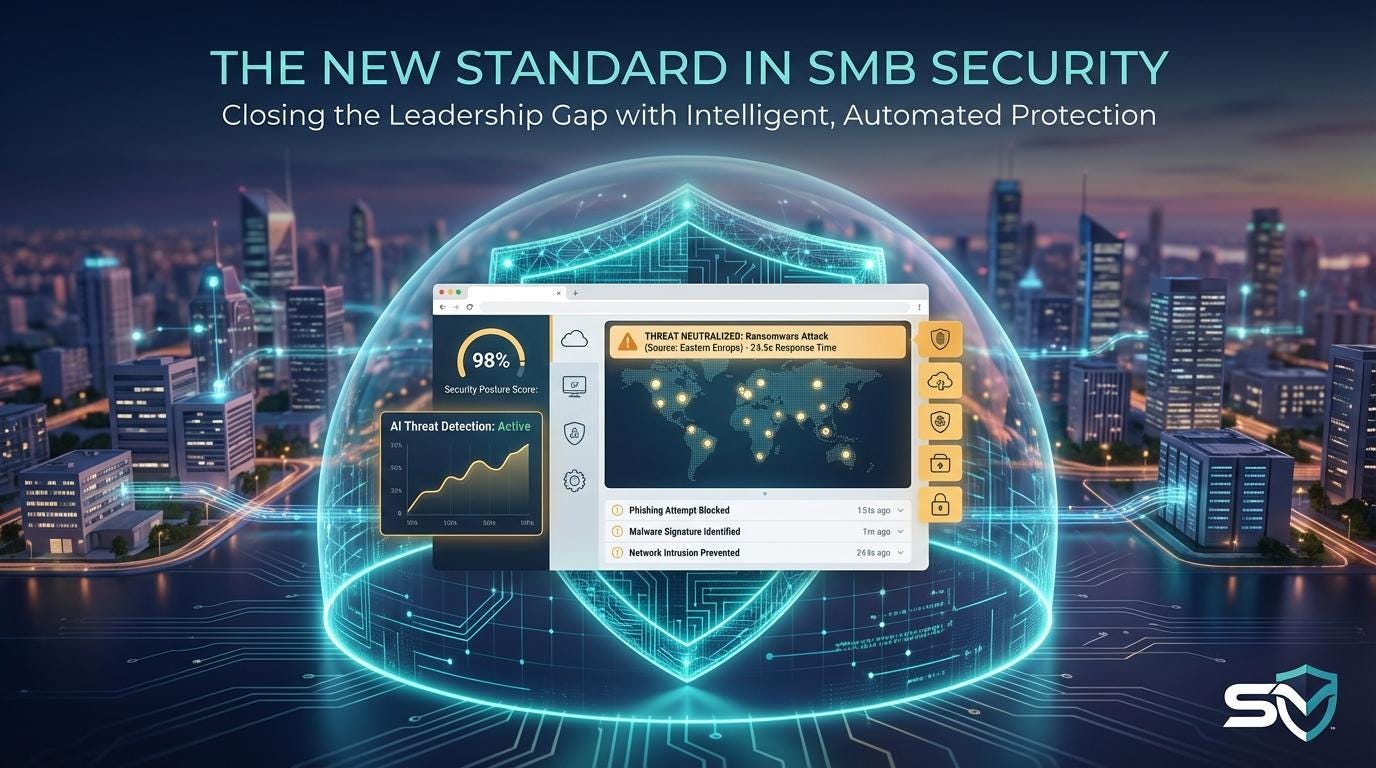
Here is a consolidated overview of the critical landscape and high-level strategic guidance, incorporating the essential baseline we’ve established:
The Modern Threat & Operational Reality
Attack Sophistication: Cybercriminals are now using AI-powered automated ransomware campaigns launched every 2 seconds, contributing to global costs projected to reach a staggering $74 billion this year. In 2025, 80 percent of small businesses faced a breach, with individual losses frequently exceeding $500,000. These are not just statistics; they are existential threats to business operations and reputations.
Browser as Perimeter: 95 percent of security incidents now begin in the web browser. The standard network perimeter is long gone; your browser is the perimeter. Legitimate business-centric activity, however essential, is increasingly risky and requires careful governance and control.
To manage the 'Browser Perimeter' effectively, tools like Sider AI integrate top-tier models directly into your workflow, allowing you to centralize web interactions into a secure, actionable knowledge base without toggling between high-risk tabs.
AI Risks & Opportunities: Beyond attack tools, leaders must be cautious about the risks posed by generic AI tools that may contain data bias or have ambiguous data retention policies, which can expose sensitive company data. Simultaneously, integrated AI-powered security tools are deemed necessary by over 62 percent of security leaders, and 73 percent plan to increase budgets for such platforms.
Strategic Mitigation: Active Resilience & Modern Frameworks
Active Resilience: This proactive posture moves beyond simple prevention to continuous monitoring of high-value assets and rapid incident containment. It recognizes that breaches will happen; the key is minimizing their impact and recovering quickly.
Framework Adoption: Frameworks like NIST CSF 2.0 provide a common, business-aligned language for risk, shifting the perception of security from a costly burden to a critical operational function. Prioritizing NIST principles ensures a structured, governance-driven approach.
Tactical Implementation: Immediate Action Points
For SMBs seeking immediate value, focus on narrow AI use cases and data-aware security while avoiding overly ambitious initial automation projects.
Implement a 90-Day “Active Resilience” Pilot:
Days 1–30: Conduct a comprehensive Asset Inventory (aligning with NIST CSF 2.0). Map every high-value data asset and user identity.
Days 31–60: Hardening phase. Deploy phishing-resistant MFA (FIDO2) across all applications, turn off vulnerable protocols like NTLM, block unauthorized browser extensions, and turn off “Save Password” features.
Move away from insecure, decentralized password management. Proton Pass for Business simplifies account security with end-to-end encryption and built-in 2FA, making it easy to enforce strong practices without adding complexity.
Days 61–90: Operationalize monitoring. Ingest logs from critical platforms (M365, Google Workspace) into AI-driven anomaly detection tools for real-time threat analysis.
Adopt Business-Specific Browsers: Deploy browsers with real-time AI to block phishing and prevent sensitive company data from being uploaded to public generative AI models. Utilize internal Data Loss Prevention (DLP) controls to intercept unauthorized “Paste” events and file uploads of source code or PII to non-approved AI domains.
Develop Core Actionable Checklists:
Credential Protection: Enforce phishing-resistant MFA and disable NTLM.
Browser Lockdown: Block unauthorized extensions and turn off saved passwords.
AI-Driven Email Defense: Implement DMARC/DKIM/SPF and look-alike detection.
Log Integrity: Ingest core system logs for AI anomaly detection.
Establish a Generative AI Acceptable Use Policy: Define approved models (prioritize Zero Data Retention), prohibited inputs (source code, PII), and mandatory human verification for outputs. Note: We provide a full policy template to our premium subscribers in the deep-dive section below.
Strategic Advice for SMB Cyber Leaders
Operationalizing the vCISO Model: Transition to a virtual CISO model to access expert leadership without the high cost of a full-time executive. The primary value of a vCISO is in strategic Risk-Based Prioritization—the critical decision of what not to fix, ensuring resources are concentrated on high-value, high-impact security initiatives.
Consolidation Alpha: Avoid “point solution bloat.” Favor integrated platforms to reduce the “integration tax”—the cost in time and complexity to make disparate tools work together. Keep your security team lean and focused by streamlining your technology stack.
Deepfake Defense: Enforce a mandatory, exception-free “Out-of-Band” verification protocol for any financial transaction over $5,000. For example, if an internal or external request seems high-stakes or comes from an unusual source, employees must call a pre-verified number to confirm legitimacy.
By focusing on these tactical, data-aware security practices and strategic leadership models, SMBs can effectively close the leadership gap, neutralize automated attacks, and build a resilient foundation for the challenges of 2026.
Get access to the additional content in “Section 2: Premium Intelligence - 2026 Deep Dives, Templates, and Exercises” for our paid subscribers.
